NATO Youth Canada
A lasting home for research, people and participation
NATO Youth Canada brings together young people working on international security and foreign policy. We created a website that makes its research, leadership and opportunities easier to find, with continued support as the organisation's people and activities change.
- Industry
- Institution
- Launched
- 2026
- Published policy work
- Research library
- Chapter participation
- Applications
What we delivered
- Research presented as accessible, shareable publications.
- Clear information and applications for people who want to contribute.
- A consistent website supported through changes in the team.
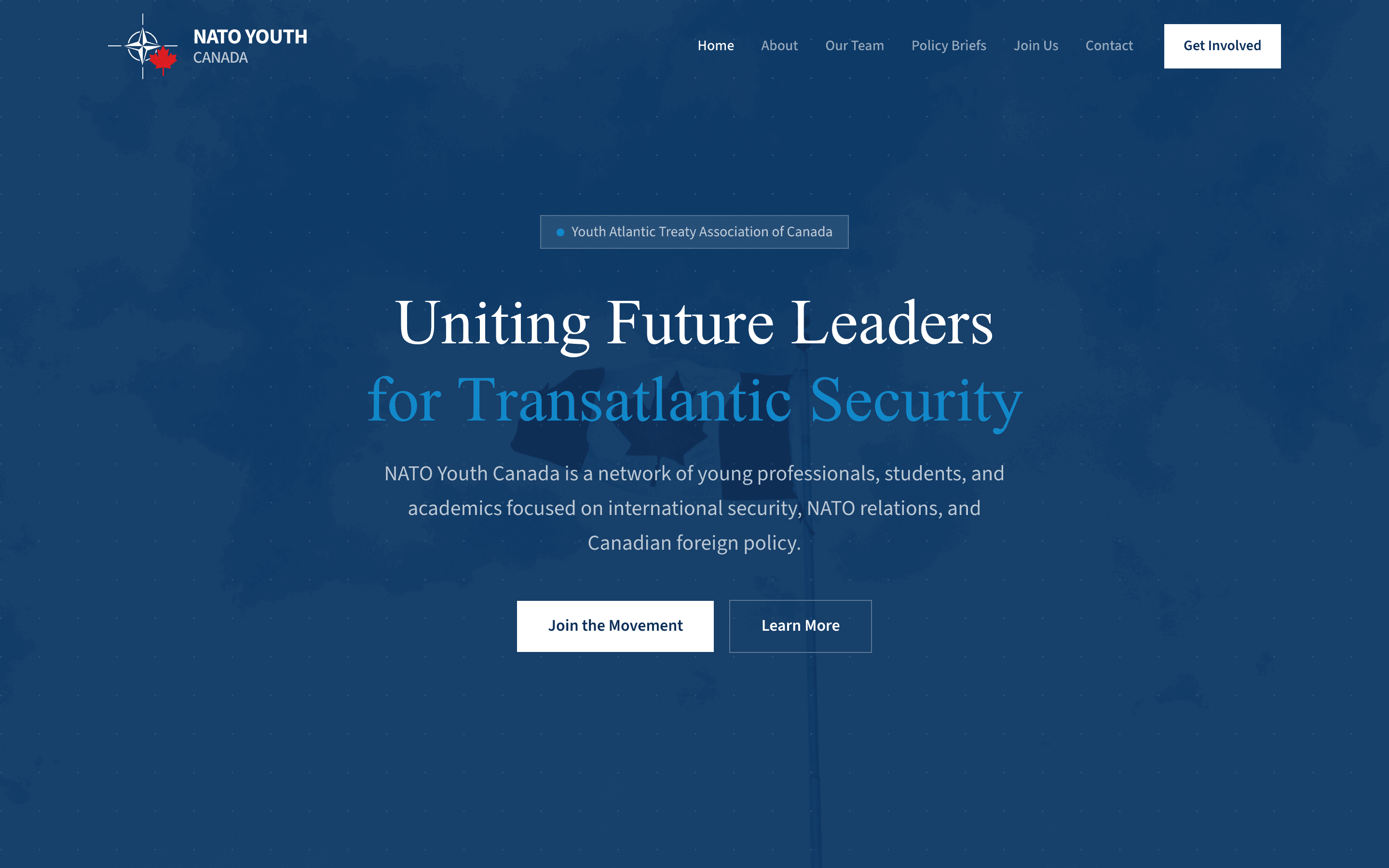
The challenge
A volunteer-led organisation needs continuity as responsibilities pass between people. Its website also has to serve several audiences: readers looking for research, prospective members considering involvement and partners seeking to understand the organisation. Each needs a clear route to relevant information.
Our approach
We connected the mission, leadership, publications and participation routes in one consistent structure. The website introduces the organisation, gives its research a dedicated home and explains how to get involved. Our continuing work has included new publication pages, a chapter-founder application process and leadership updates.
01 / 03
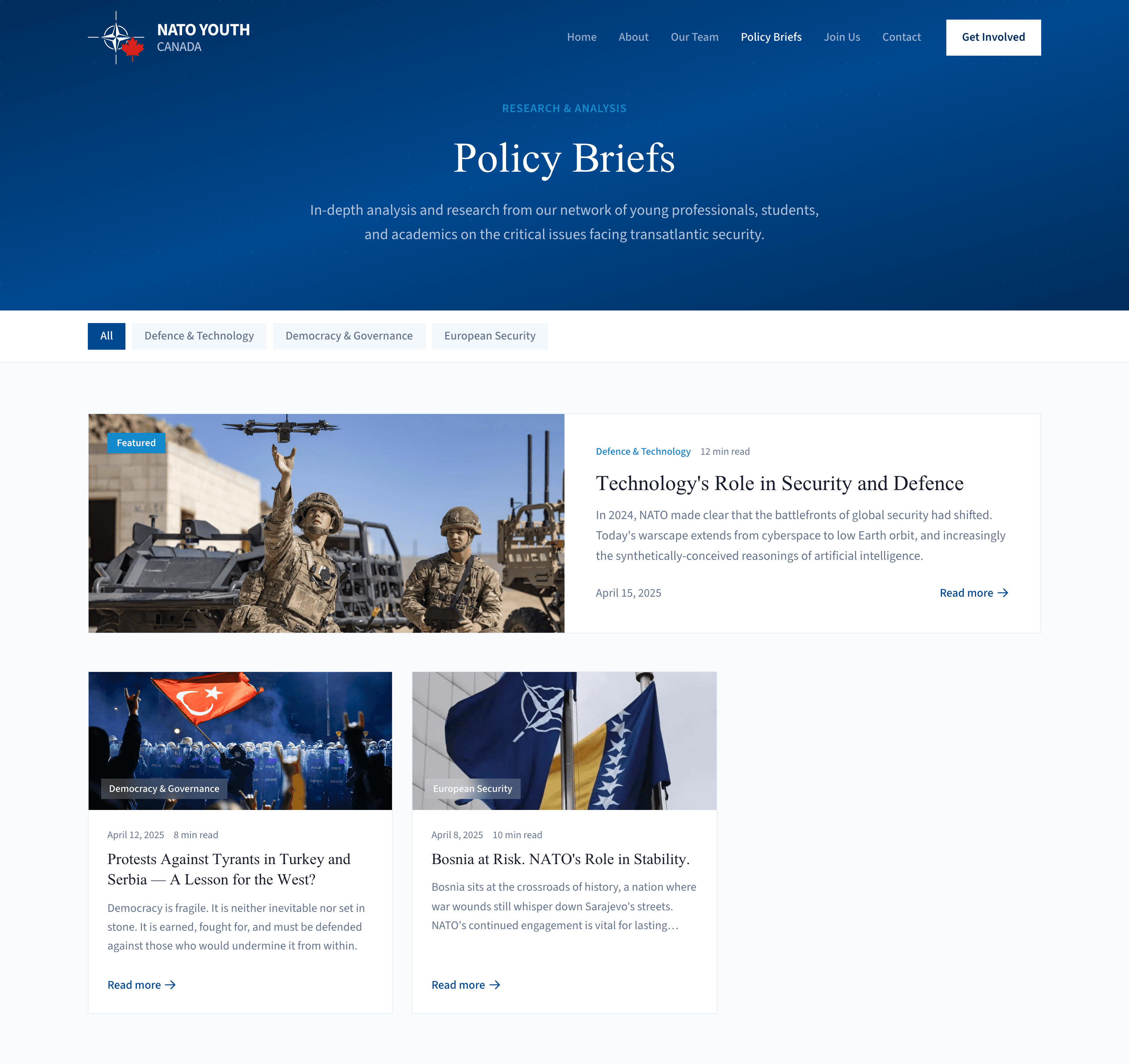
Research that can be found and shared
Policy briefs are organised by theme and lead to full articles with dates and supporting sources. Readers can move from a subject that interests them into the organisation's work, while individual article links make that work easier to reference and share.
02 / 03
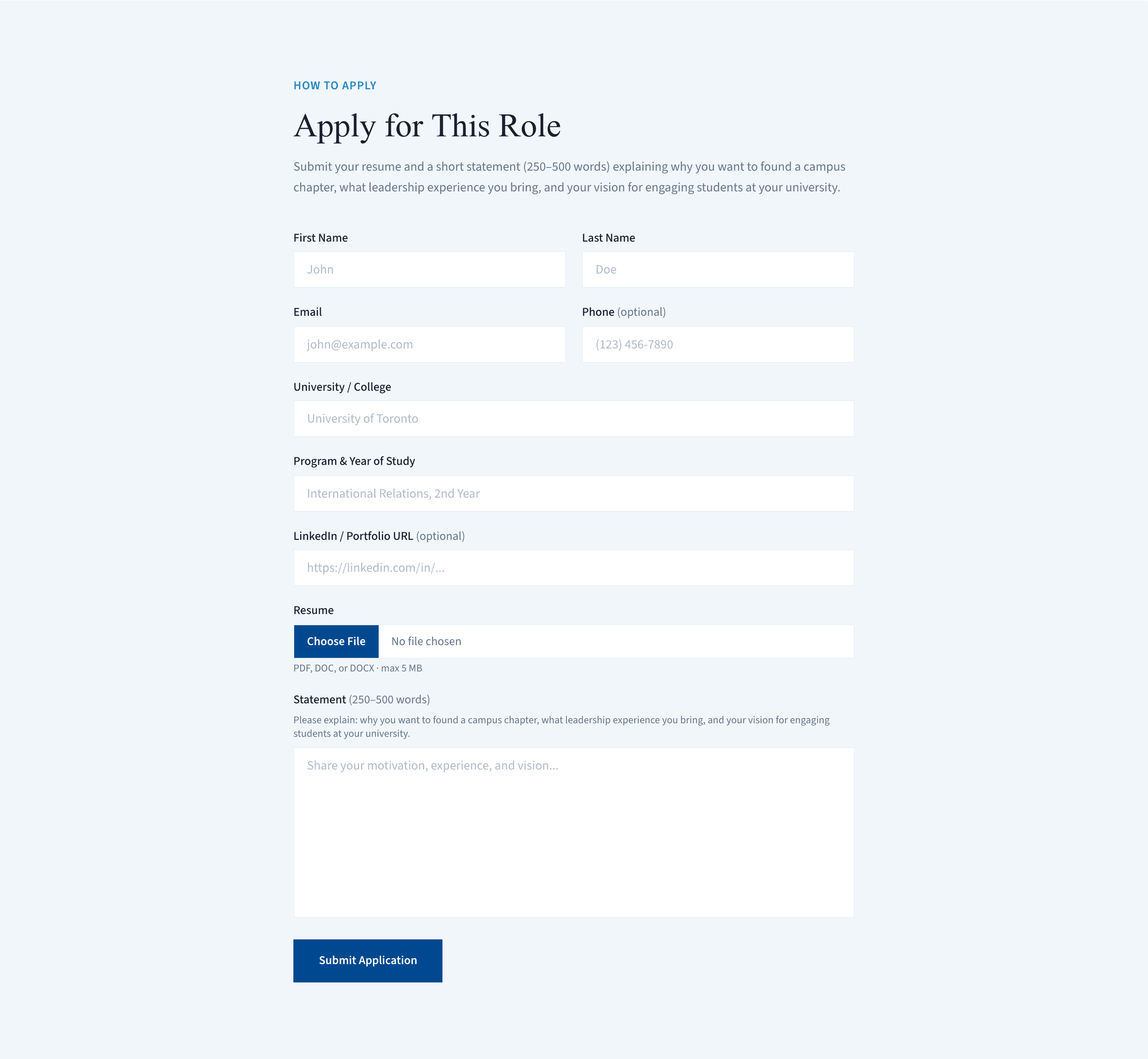
A clear route into participation
The campus chapter-founder page brings the role, expectations and application together. Applicants can read what is involved and provide their statement and résumé on the same page, with the necessary information organised around the opportunity.
03 / 03
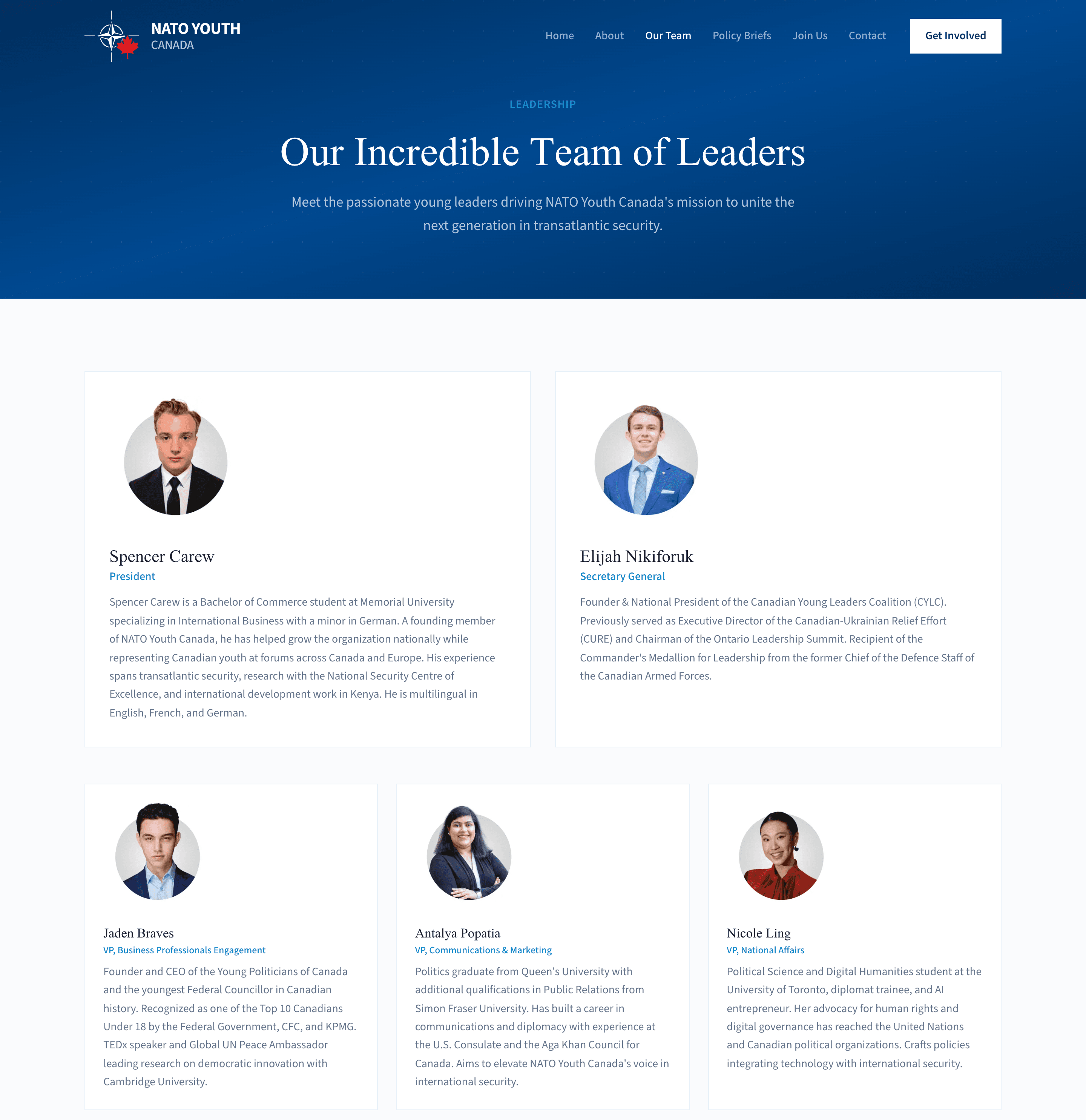
Continuity with a human face
The team page introduces named leaders, responsibilities and relevant experience. As the executive changes, updates keep that introduction accurate and familiar, giving visitors a clearer picture of who is responsible for the organisation's work.
Continuing work
The website has developed alongside the organisation. Since the initial build, we have added full policy articles and chapter applications and updated leadership profiles. That continuing involvement helps the team build on an established website as its priorities evolve.
In their words
“We reached out to Torge to redesign our website, and he exceeded our expectations. He rebuilt the site from top to bottom, made excellent stylistic and design choices, and needed very little direction to understand what we were looking for. The process was smooth, professional, and efficient, and we are extremely happy with the finished product. I would highly recommend Torge to anyone looking for a thoughtful, creative, and reliable web designer.”
Spencer Carew
President, NATO Youth Canada